Liveaboard.com

Glacier Bay National Park Cruises

Our guests rated adventure cruises in Glacier Bay National Park as 9.4

  • 100% Best Price Guarantee

Adventure Cruises in Glacier Bay National Park

Glacier Bay National Park Cruises are a great way to explore the beauty of Alaska’s UNESCO-listed Glacier Bay National Park. Located in the southeastern part of the state, the 65-mile stretch of national park can be found within a coastal route called the Inner Passage.

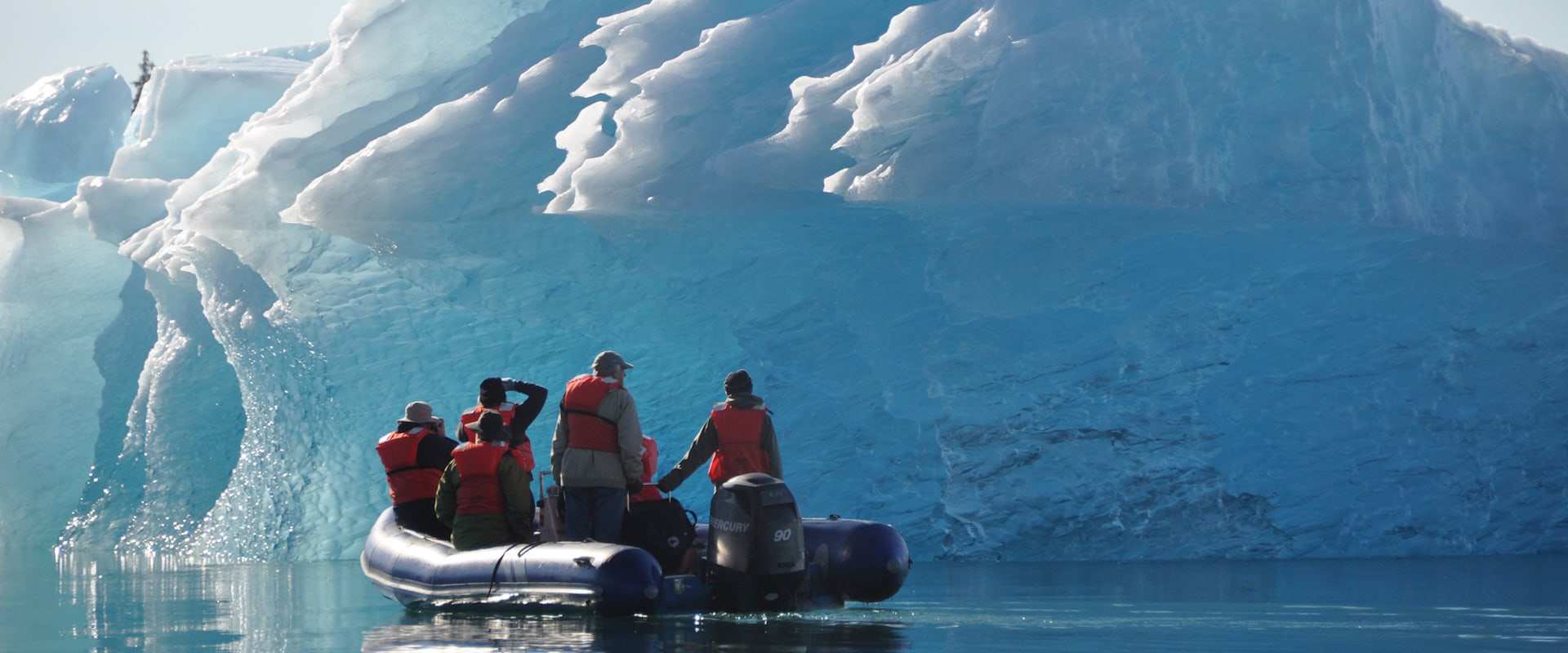
Adventure cruises to Glacier Bay National Park let you observe the local wildlife and landscapes at close range and join in with a host of thrilling activities. Fuel your spirit of adventure with kayaking or paddling a skiff in the icy waters and hiking through the remote wilderness. Relax in an outdoor hot tub after an exciting day, or sample a mud bath.


Top things to do and see in Glacier Bay National Park

Cruises to Glacier Bay National Park combine nature and wildlife, dramatic landscapes, adventure activities, relaxation, and the chance to explore remote villages and see the local way of life. Cruise itineraries generally combine a variety of experiences so that you can enjoy the very best of Glacier Bay National Park. Top things to enjoy on cruises around Glacier Bay include:

Glaciers - Stunning glaciers surrounded by snow-capped peaks and verdant forests will take your breath away. Admire these huge natural wonders, and watch as the landscapes gradually change, with huge blocks of ice calving away and crashing into the waters. The Marjerie Glacier is a particularly exceptional spot for witnessing the majesty of nature. John Hopkins Glacier is incredibly photogenic, while McBride Glacier is a terrific place for kayaking.

Wildlife - An abundance of wildlife calls Glacier Bay National Park home, and small ship cruises let you get even closer to an array of fascinating creatures. Watch as whales and seals glide through the icy waters while sea lions and sea otters frolic nearby, look to the skies, see eagles soaring above, and see bears, deer, wolves, and moose roaming on dry land. Other animals that populate the area include squirrels, weasels, foxes, ermines, marmots, and minks.

Guided Tours - Take a narrated guided tour of the national park to learn more about the area’s history, ecology, and biology to appreciate the glorious sights better. The experienced and knowledgeable guide can answer any questions for a truly fulfilling experience.

Culture - Meet the Huna Tlingit, a community that inhabited Glacier Bay for many years. Discover more about their ways of life and ancestry and be fascinated by their traditions and cultural practices. While the group no longer permanently lives in the area, having been forced to relocate after natural disasters, they still retain strong historical ties to the area. The Huna Tribal House provides a great overview.

Top Tips for Visiting Glacier Bay National Park

  • Don’t forget to take your camera on your cruise around Glacier Bay National Park; there are so many spectacular sights that you will want to capture! Long-range lenses are ideal for snapping distant wildlife, while wide-angled lenses are perfect for landscape shots. You will probably also want to take a tripod.
  • Warm clothing is recommended, and dressing in layers is strongly advised. Make sure you have a change of clothing easily to hand following adventures, like kayaking and boating, on the waters.
  • Don’t forget to take rain gear on your land outings.
  • Binoculars are recommended to see wildlife from a distance.
  • Glacier Bay National Park has some excellent hiking opportunities; pack sturdy and broken-in hiking boots.
  • Pack a bathing costume to enjoy hot tubs under the stars.

Best time to cruise Glacier Bay National Park

The best time to visit Glacier Bay National Park is summer when the temperatures are slightly warmer, humpback whales return to the area after the winter, and seal pups float on blocks of ice. Summer is also when you may be lucky and glimpse the spectacular Northern Lights.

April to June are typically the driest months, while Glacier Bay generally experiences the most rainfall in September and October. Plan ahead and book your Glacier Bay National Park cruise in advance to avoid disappointment.

While winter is usually cold and foggy, there is still plenty to enjoy on a cruise around Glacier Bay National Park.

Where do Glacier Bay National Park cruises depart from?

Your Alaska small ship cruise to Glacier Bay National Park will usually depart from the state capital of Juneau, Sitka, or Ketchikan. Juneau has no road access; visitors typically arrive by sea or fly into Juneau International Airport (JNU). Sitka, the former state capital, is best reached by flying into Sitka Rocky Gutierrez Airport (SIT), and you can also fly into Ketchikan International Airport (KTN), from where you need to take a short boat ride to reach the cruise departure point. Flights to each Alaskan airport are available from a selection of US airports.

Some Glacier Bay National Park cruise itineraries can also depart from Seattle, in the mainland US state of Washington.

Our reservations team is available to help arrange your next Alaska adventure cruise to Glacier Bay National Park. Book online today.

Glacier Bay National Park Adventure cruise reviews

  • Rating 9.4 out of 10
  • 9.4 Superb
  • Rating 10.0 out of 10
  • 10.0 Exceptional
  • Gary M
  • Flag of United StatesUnited States

The excursions were great. Hiking and or kayaking every day at beautiful stops.

Cruising Glacier Bay National Park in June on the Catalyst


What to know about adventure cruising in Glacier Bay National Park

How do you get to Glacier Bay National Park?

There's no road in — visitors arrive by cruise ship, small expedition boat, or the daily tour boat out of Bartlett Cove. To reach the park headquarters at Bartlett Cove independently, you fly into Gustavus and drive 10 miles (16 km) to the dock.

Where is Glacier Bay National Park?

Glacier Bay is in Southeast Alaska, about 65 miles (105 km) northwest of Juneau. It sits at the northern end of the Inside Passage, tucked between the Fairweather Range and the Gulf of Alaska.

What town is Glacier Bay National Park near?

The park's only road-accessible village is Gustavus, a community of about 450 people just outside the park boundary. Juneau, 65 miles (105 km) southeast, is the nearest sizeable city.

How do you visit Glacier Bay National Park?

The easiest way is on an Alaska cruise that includes a Glacier Bay day — the National Park Service caps the number of ships allowed in. Independent visitors fly to Gustavus and join the daily catamaran tour or kayak from Bartlett Cove.

When was Glacier Bay National Park established?

Glacier Bay was first designated a national monument in 1925 and was redesignated a national park and preserve in 1980 under the Alaska National Interest Lands Conservation Act.

What is Glacier Bay National Park known for?

It's known for active tidewater glaciers calving into the sea, an extraordinary record of glacial retreat (the bay was solid ice as recently as 1750), humpback whales, harbor seals on icebergs, and being a UNESCO World Heritage Site.

How big is Glacier Bay National Park?

The park and preserve cover about 3.3 million acres (13,300 sq km / 5,130 sq mi), making it larger than Connecticut. Of that, around 2.7 million acres are designated wilderness.

How do you get to Glacier Bay from Juneau?

Most visitors fly the short 25-minute hop from Juneau to Gustavus on a regional airline, then take the 10-mile (16 km) shuttle to Bartlett Cove. Charter boats and floatplanes also make the run.

What is the climate like in Glacier Bay National Park?

Cool and wet — summer highs run about 55–65°F (13–18°C) with frequent rain and fog, and winters drop to roughly 20–30°F (−7 to −1°C). The park receives around 70 inches (178 cm) of precipitation per year at Bartlett Cove.

What animals live in Glacier Bay National Park?

The park supports humpback and orca whales, harbor seals, sea otters, Steller sea lions, brown and black bears, mountain goats, moose, bald eagles, and seabirds including puffins and kittiwakes.

Is Glacier Bay National Park worth visiting?

For most travelers, yes — it's one of the most dramatic glacial landscapes accessible by ship in North America, with active tidewater glaciers, abundant wildlife, and a Park Ranger who narrates from on board during cruise visits.

What biome is Glacier Bay National Park?

It's primarily temperate coastal rainforest at lower elevations — spruce and hemlock forest, muskeg and shoreline — transitioning to alpine tundra and ice fields higher up. The bay itself is a marine ecosystem.

We’re here to help, 24/7.

Connect with our expert travel consultants to plan your next trip.

  • Juliane Ball
  • Oksana Kovaleva
  • Ester Canali
  • Nina Kapp
  • Josue Zarco
  • Nicole Laughlin
  • Andrea Martinez