Liveaboard.com

Small-Ship Cruises in Turkey

  • 100% Best Price Guarantee

Adventure Cruises in Turkey

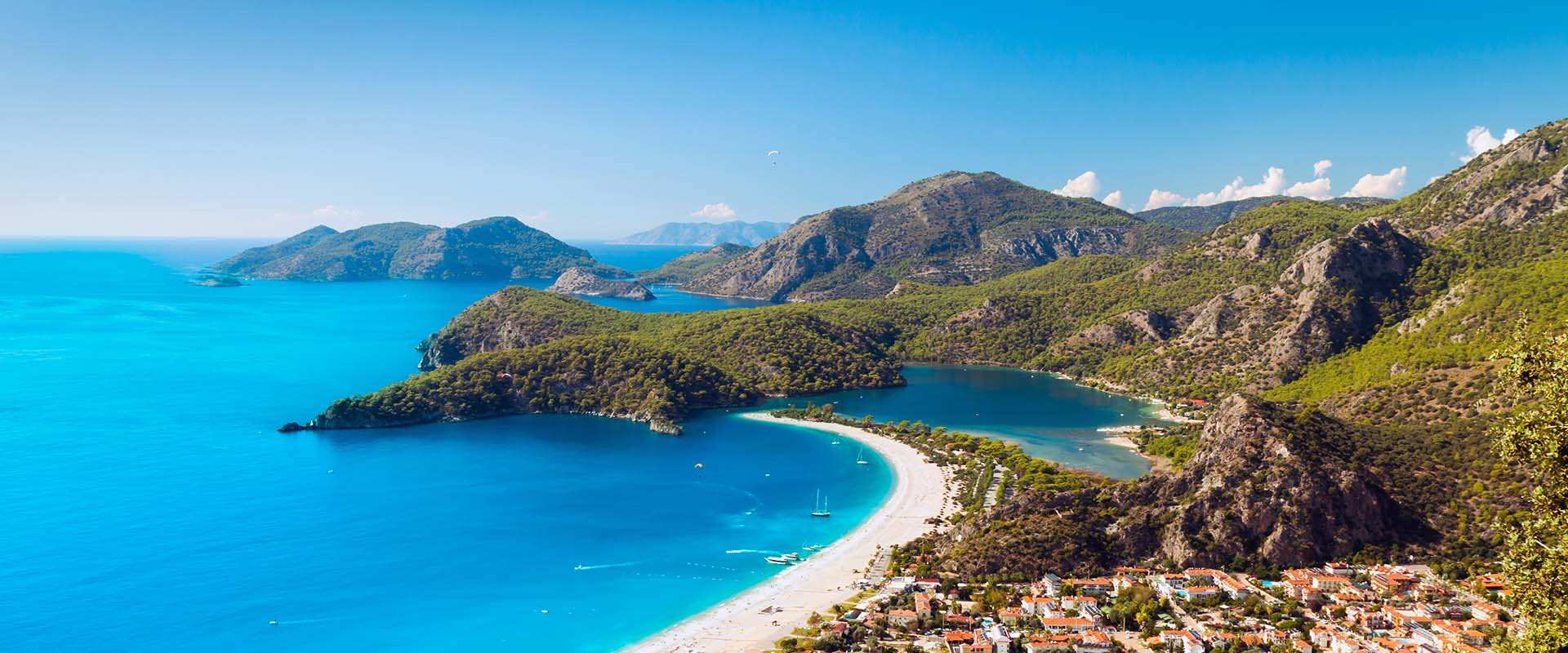
Turkey has a long and beautiful coastline, and adventure cruises offer the chance to explore some of the lesser-known gems of this impressive part of the world. The shoreline has beautiful tiny islands, clear blue waters, and long sandy beaches.

Adventure cruises in Turkey offer the chance to explore some of the lesser-known gems of this impressive part of the world. Along the southern coast of Turkey from Marmaris, cruises will discover huge natural parks, tiny archipelagos, and a host of modern and ancient cities and towns. The Turquoise Coast stretches from Bodrum to Alanya and is home to some of Turkey’s best-known holiday resorts. The shoreline has beautiful tiny islands, clear blue waters, and long sandy beaches. The waters are also incredibly calm, especially in the bays and inlets of the smaller island groups. These are ideal places for sunbathing and swimming from a small ship cruise, and for the more adventurous, paddle boarding, snorkeling, and sea kayaking are all available.

To say Turkey has a rich history is an understatement; the coastline and islands are covered with ancient sites, many of which are now found in abandoned locations. There are some locations such as Patara where visitors can have the best of both worlds, a long sandy beach with the remains of an ancient Roman city. One can visit several sunken ruins from a small ship cruise in Turkey. Some of these include the opportunity to snorkel or kayak around directly from your small cruise boat.


Best Turkey cruises and areas to visit

Cruises in Turkey can hop seamlessly from one beauty spot to the next, so you don’t have to miss the best of the amazing Turkish coastline. Small ship cruises mean you can be tucking into a delicious traditional meal on the streets of Marmaris one day and exploring the ancient ruins of Lycia the next.

Blue Cruise

A Blue Cruise is Turkey’s signature small-ship sailing experience, traditionally taken aboard a wooden gulet along the Aegean and Mediterranean coasts. These cruises combine leisurely days at sea with time for swimming, snorkeling, sunbathing, village visits, and open-air meals prepared with fresh local ingredients. Whether sailing between Bodrum, Marmaris, Fethiye, Göcek, or Kekova, a Blue Cruise captures the essence of coastal Turkey: ancient ruins, hidden bays, warm hospitality, and a slow rhythm shaped by wind, water, and sunshine.

Bodrum

The city of Bodrum is a port on Turkey's southwest coast, near Muğla province, and it is a must-see for history enthusiasts. The modern-day port has an exciting and diverse culture, evident in its many cruises that head out onto the water, where you can enjoy breathtaking views.  It has been called "the most beautiful place in Asia" because of its rich history and because it is home to one of the seven wonders of the world - The Mausoleum of Halicarnassos, which holds some impressive temples. 

Dalyan

The main town of Dalyan is along the riverside with beautiful views of the surrounding countryside. The town is a popular destination for visitors who enjoy its lively atmosphere and the nearby ruins of Kaunos. Visitors can spend hours exploring the city's ruins and take in the spectacular tombs carved into the rock faces along the Dalyan River. Another of the best-known beaches in southern Turkey is Iztuzu Beach in Dalyan, known not only for swimming but also as a nesting site for loggerhead turtles. It is worth noting that while the beach is open to the public during the day, it is closed from eight in the evening to protect these turtles and their nests.

Kekova

Close to the stunning resorts of Kas and Kalkan, the sunken ruins of Kekova are a perfect stop-off on a small ship cruise. Many will stop off overnight thanks to the ideal water conditions and the chance to see the remains of a true sunken city. The ruins can be seen from your small ship cruise or sea kayak, which lets you get up close and enjoy paddling around this lovely coastline.

Marmaris

Small-ship cruises in Marmaris offer an intimate and enchanting way to explore the Turkish Riviera's stunning coastlines and crystal-clear waters. This picturesque port city, nestled between rugged mountains and the azure sea, is the perfect gateway to the Aegean's hidden gems. Guests can look forward to discovering secluded bays, ancient ruins, and charming islands, all while enjoying the warm Turkish hospitality. The blend of cultural experiences, from traditional Turkish baths to vibrant bazaars, along with opportunities for snorkeling, swimming, and kayaking in tranquil coves, makes Marmaris an ideal destination for travelers seeking adventure, relaxation, and cultural immersion on their small-ship cruise.


Göcek

Göcek is one of Turkey’s most elegant small-ship cruising hubs, known for its marina-lined waterfront, forested islands, and easy access to the sheltered bays of the Turquoise Coast. Cruises from Göcek often focus on short hops between secluded anchorages, quiet beaches, and scenic swimming stops, making the experience feel intimate and relaxed. With its calm waters, refined harbor atmosphere, and proximity to highlights such as the Yassica Islands and Dalyan, Göcek is ideal for travelers seeking a gentle, scenic introduction to Turkey by sea.


The Gulf of Gökova

Small-ship cruises in the Gulf of Gökova reveal one of Turkey’s most scenic sailing regions, where pine-cloaked hills drop into calm turquoise water and quiet coves feel tailor-made for anchoring overnight. Departing often from Bodrum or nearby harbors, these cruises explore sheltered bays, tiny islands, swimming spots, and historic coastal settlements at an unhurried pace. The region is especially suited to gulets and boutique yachts, offering a classic blend of sun-drenched decks, fresh Aegean cuisine, and peaceful evenings beneath clear Mediterranean skies.

Yassica Islands

Within the Fethiye Gulf are the five islands that make up the tiny archipelago of Yassica. The islands are close together and are believed to have once been joined, as indicated by ancient ruins beneath the water. It is worth snorkeling around these ruins, as they are one of the few not protected by a ban on swimmers. For those who prefer to explore terrestrial history, there are also Byzantine-period ruins on the island of Haci Halil.


Best time to cruise in Turkey

The best time to cruise to Turkey depends on your interests, budget, and tolerance for heat. The summer months, June to August, are hot and can be slightly humid, though less so along the coast, where a sea breeze helps keep the evenings cool. Spring is an excellent time to take a small-ship cruise in Turkey, as the weather is generally sunny and warm, but not as hot as in the summer, making it a good time for historical visits and hiking. Autumn is perfect if you enjoy some heat and want warm waters. The water temperature remains high during the summer, but the nights are not as hot and humid as in summer.

Getting to Turkey

Turkey has several international airports along its coastline, the largest of which are in Marmaris and Antalya. These airports have direct flights from major European airports, and seasonal flights are also available to smaller airports at Dalyan and Bodrum. For those traveling further afield, flying directly to Istanbul International Airport and then to the coastal airports from there is possible. Once you are in Turkey, minibusses and private taxis are reasonably easy to use, and hiring a car is inexpensive; however, the roads can be chaotic and sometimes dangerous.


Turkey Cruise Tips

  • The beaches and towns around the Turkish coast are fairly relaxed with regards to dress and behavior, and visitors shouldn’t worry too much about wearing shorts and swimming clothes daily. It is, however, worth taking shawls or something to put over you if you are visiting a religious building or conservative area.
  • Turkey is on the Mediterranean Sea but it is not part of the European Union and so you will need a separate visa to enter the country. Turkey uses the Turkish Lira, although you will find it easy to convert from US Dollars or Euros in Turkey. ATMs are commonplace and credit cards are widely accepted; however, it is worth noting that it is uncommon for anyone to accept traveler’s checks.
  • Turkey’s coastal climate can be very hot, and the sun shines brightly despite a cooling sea breeze. It is, therefore, easy to burn, and it is important to bring sun protection and plenty of it.
  • Haggling is commonplace in Turkey, and it is expected that you negotiate the price of any goods bought in a shop. It is also usual to be approached by shopkeepers who try to convince you to come into their shop. This can seem very forward at times but is not to be taken too seriously and should be enjoyed as part of the local culture.


What to know about adventure cruising in Turkey

Is Turkey a Muslim country?

Turkey is roughly 99% Muslim, mostly Sunni, but it has been a constitutionally secular state since 1923 — religion and government are formally separated. For visitors, that mix means you'll hear the call to prayer five times a day, see headscarves and bikinis on the same beach, and rarely encounter dress restrictions outside mosques.

Is Turkey safe to travel to right now?

Turkey is generally safe for tourists, and the coastal cruising regions along the Aegean and Mediterranean — Bodrum, Fethiye, Marmaris, Göcek — see very little of the unrest that occasionally affects the southeastern border with Syria. The US State Department advises avoiding areas within 10 miles (16 km) of the Syrian border, but the small-ship cruising coast is roughly 600 miles (965 km) away. Check the current advisory at travel.state.gov before booking (as of 2025).

Is Turkey a safe country to visit?

Yes — Turkey welcomes around 50 million international tourists a year and ranks as one of the world's top-six visited countries. Petty theft and pickpocketing in crowded markets (Istanbul's Grand Bazaar especially) are the most common issues; violent crime against travelers is rare. The usual precautions apply.

Is Turkey a European country?

Turkey straddles two continents — about 3% of its landmass (Thrace, including European Istanbul) sits in Europe, and the other 97% (Anatolia) is in Asia. Politically, Turkey is a member of NATO and the Council of Europe and has been an official EU candidate since 1999, though accession talks have been frozen since 2018 (as of 2025).

When is the best time to visit Turkey?

Late April to early June and September to mid-October are the sweet spots for cruising the Turkish coast — daytime temperatures sit around 70–80°F (21–27°C), the sea is swimmable, and crowds are lighter than in peak summer. July and August are hot (often 90–100°F / 32–38°C) but reliably sunny.

Is Turkey expensive to visit?

Turkey is one of the more affordable Mediterranean destinations — meals at local restaurants typically run $8–15, domestic flights often under $50, and entry to major sites like Ephesus around $30 (as of 2025). The Turkish lira's weakness against the dollar continues to favor visitors, though prices in tourist-heavy spots like Istanbul and Bodrum have climbed faster than inflation elsewhere.

Is Turkey a good place to visit?

Few countries pack as much variety into one trip — Greco-Roman ruins at Ephesus and Aphrodisias, Ottoman Istanbul, the lunar landscape of Cappadocia, and a 4,500-mile (7,240 km) coastline of turquoise bays. For small-ship cruisers, the southwest coast between Bodrum and Antalya offers some of the Mediterranean's most secluded anchorages.

Where should you visit in Turkey?

The classic first-timer triangle is Istanbul (Byzantine and Ottoman monuments), Cappadocia (cave hotels and hot-air balloons), and the Aegean-Mediterranean coast for ruins and beaches. Small-ship cruisers usually concentrate on the Bodrum-Fethiye-Antalya stretch — Kekova's sunken city, Butterfly Valley, and the Lycian rock tombs at Dalyan are highlights.

Is Turkey in Europe for travel insurance?

It depends on the insurer — many UK and European policies classify Turkey under "Europe" coverage, while others list it as "Worldwide" or carve it out separately. Always check the schedule of cover before buying; the distinction can change your premium significantly (as of 2025).

Where is Turkey located?

Turkey sits at the crossroads of southeastern Europe and western Asia, bordered by Greece and Bulgaria to the west and by Georgia, Armenia, Iran, Iraq, and Syria to the east and south. It has roughly 4,500 miles (7,240 km) of coastline along the Black, Aegean, and Mediterranean seas.

Is Turkey a Schengen country?

No — Turkey is not part of the Schengen Area, so a Schengen visa won't get you in and a Turkish entry doesn't count toward your 90-day Schengen allowance. US passport holders need a separate e-visa for stays up to 90 days, which can be obtained online at evisa.gov.tr (as of 2025).

Do US citizens need a visa to visit Turkey?

US citizens need an e-visa for stays up to 90 days within any 180-day period — it's a simple online application at evisa.gov.tr that costs around $50 and is usually approved within minutes (as of 2025). Your passport must be valid for at least 60 days beyond your intended departure date.

What are some interesting facts about Turkey?

Turkey is home to the world's oldest known temple (Göbekli Tepe, around 9600 BC), invented coffee culture as we know it, and contains seven UNESCO World Heritage cities. Istanbul is the only city in the world spanning two continents, and the Turkish language uses an alphabet introduced just a century ago, replacing Arabic script in 1928.

Why visit Turkey?

Turkey offers an unusual density of experiences — ancient Greek and Roman ruins outside the typical tourist routes, food culture rooted in Ottoman court traditions, hammams, bazaars, and a coastline tailor-made for small-ship sailing. The exchange rate also stretches a travel budget further than almost anywhere else in the Mediterranean.

How many days do you need in Turkey?

Ten to fourteen days is the sweet spot for a first visit covering Istanbul, Cappadocia, and a coastal stretch. For a small-ship cruise alone, plan on 7–10 days at sea — the Bodrum-to-Antalya run typically takes a week and lets you stop at Kekova, Fethiye, and the Lycian coast without rushing.


Similar destinations

Croatia

Croatia

  • Rating 9.1 out of 10
  • 33 cruise ships
  • 138 reviews
Greece

Greece

  • Rating 8.6 out of 10
  • 15 cruise ships
  • 40 reviews
Scotland

Scotland

  • Rating 0.0 out of 10
  • 4 cruise ships
Portugal

Portugal

  • Rating 0.0 out of 10
  • 1 cruise ship
Galapagos

Galapagos

  • Rating 9.3 out of 10
  • 44 cruise ships
  • 142 reviews
Australia

Australia

  • Rating 9.4 out of 10
  • 12 cruise ships
  • 5 reviews

We’re here to help, 24/7.

Connect with our expert travel consultants to plan your next trip.

  • Nina Kapp
  • Nicole Laughlin
  • Mylene Issartial
  • Farah Celada-Benito
  • Josue Zarco
  • Andrea Martinez
  • Oksana Kovaleva