Liveaboard.com

Richelieu Rock Liveaboard Diving

Our customers rated liveaboard diving in Richelieu Rock as 9.0.

  • 100% Best Price Guarantee

Liveaboard Diving in Richelieu Rock

What to expect on a Richelieu Rock Liveaboard

Liveaboard diving in Richelieu Rock ensures a trip to one of Thailand's best dive sites and is a firm favorite amongst Thailand liveaboard itineraries. Approximately 45km off the Andaman coast, to the southeast of the Surin Islands, this site resembles a horse-shoe with a central limestone pinnacle and several smaller rock outcrops on either side. The topography of this site, matched with its geographical remoteness, attracts a great variety of marine life. Shifting tidal currents in this part of the Andaman Sea create upwellings of plankton, providing a feeding ground for small to large. Richelieu's remote location is not sheltered from the open water and is recommended for the more advanced diver due to changing currents, which can be mild to strong, but also mean that the best way to experience Richelieu Rock is via dive liveaboard.

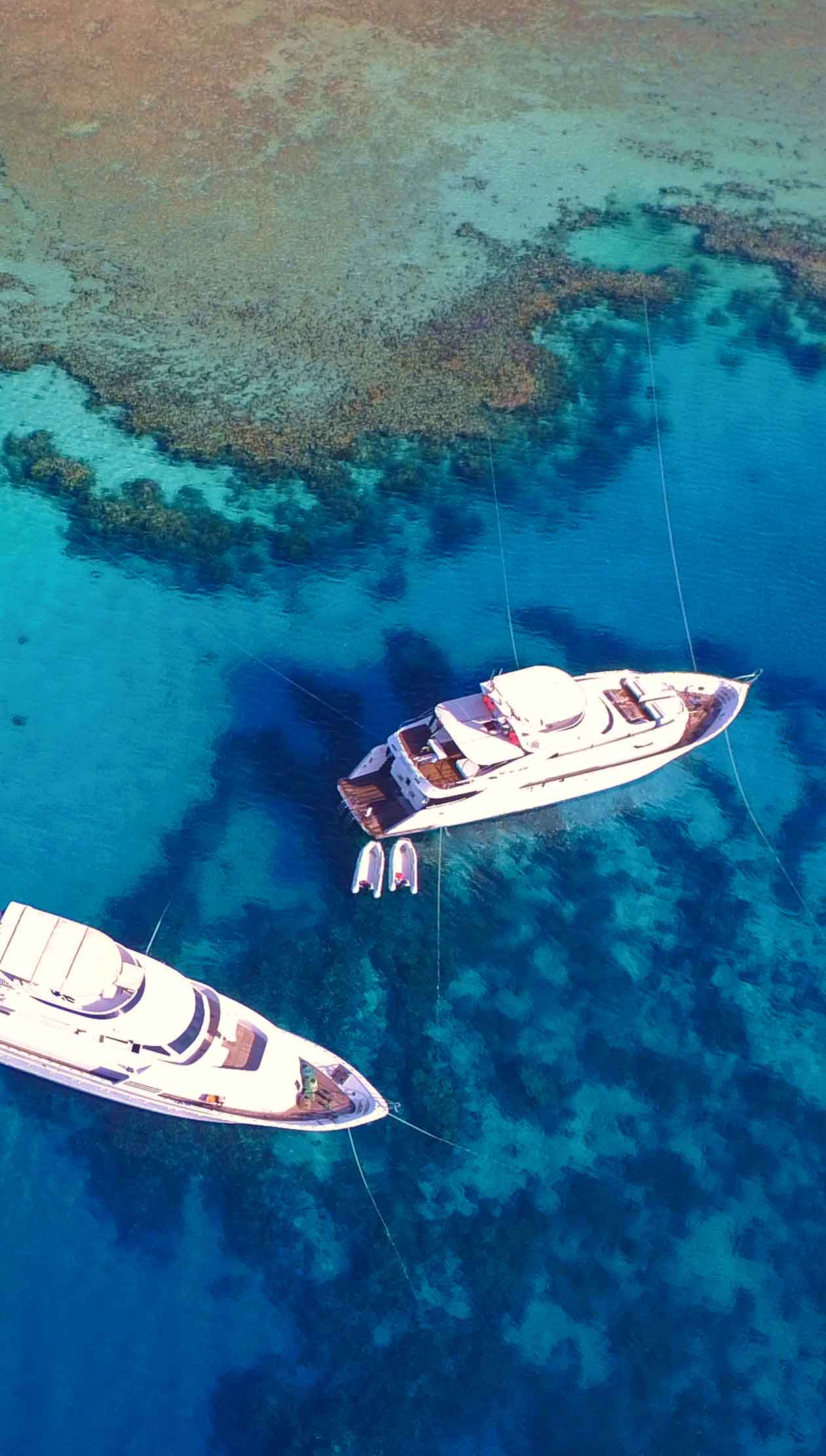
Aboard a Richelieu Rock liveaboard, divers can expect around 3 dives per day, with a choice of liveaboards ranging from simple low-budget to luxury liveaboard. Most Richelieu Rock itineraries depart from Khao Lak and include a trip to the Similan Islands.

What You Can See

Sailing in Richelieu Rock offers divers the best chance to experience this iconic dive area. Jacques Cousteau named Richelieu after Cardinal Richelieu of the Three Musketeers, whose scarlet cape reminded him of the soft purple corals adorning the limestone rocks. Rising from the sandy bottom, the pinnacles are decorated with shelves, ledges, cracks, crevices, and caves. The shallows are covered in sea anemones, and not far below, an abundance of soft coral fields adorn the edges, surrounded by thousands of shimmering glassfish. The black coral bushes and gorgonians are found slightly deeper, all providing shelter to the diverse marine life. This continuum of color can be seen throughout the excellent multi-level diving that goes down to a maximum depth of 35m.

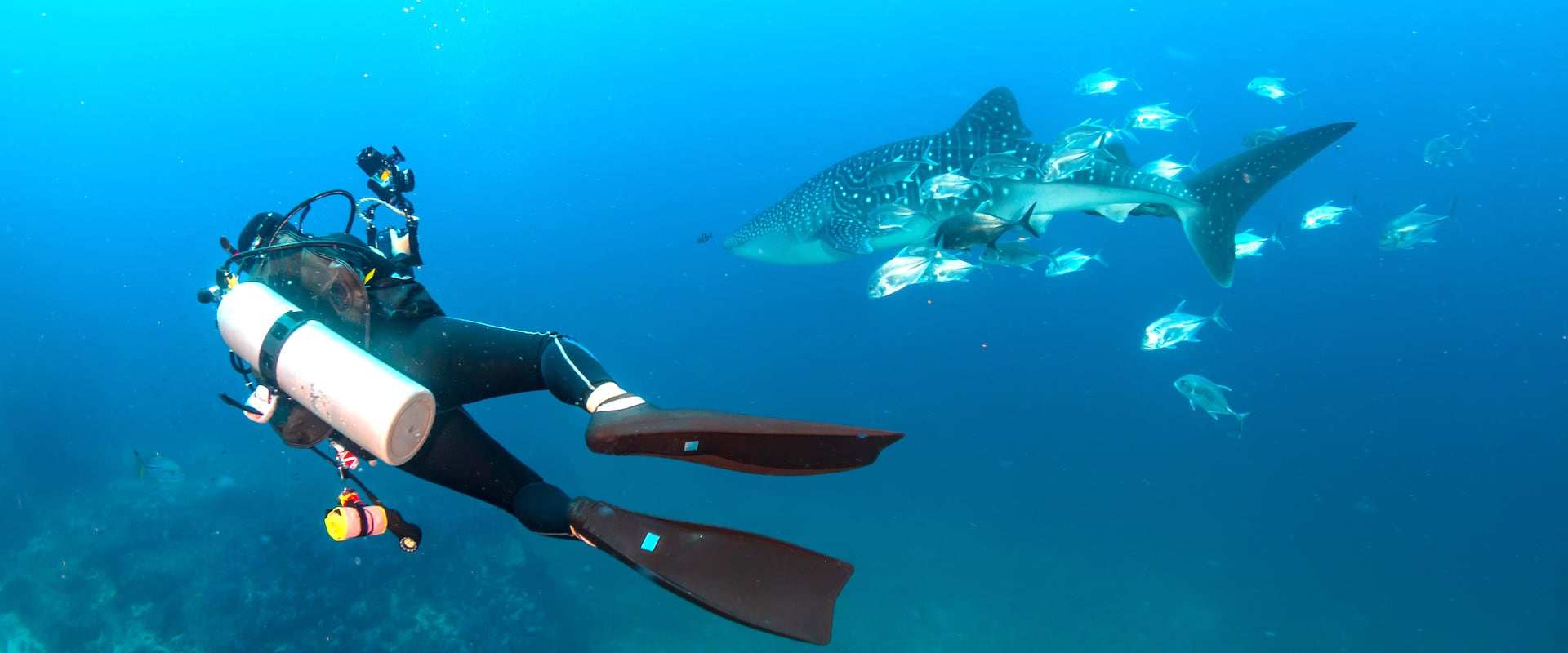
The biodiversity of the marine life and topography at Richelieu Rock is astounding. As you descend, you can sometimes see the swirling blue masses of jacks, barracuda, and fusiliers in a funnel-like formation. Big schools of trevally, funneling barracuda, and dogtooth tuna maraud the area in search of their next meal. The winter months of February to April bring more opportunities for whale shark sightings and other pelagics like the Manta Ray, feasting on plankton. Seeing these creatures gliding around you seemingly effortlessly is considered the ultimate experience for most divers and why most visit Richelieu. Although sightings can be rare, they tend not to disappear quickly once spotted, as it is their feeding ground. It is an exhilarating honor to share the waters with these gentle giants.

Do not be detracted by the larger marine life alone, as Richelieu is also home to a plethora of critters such as porcelain crabs, tiger tail sea horses, pipefish, robust ghost pipefish, mantis shrimps, harlequin shrimp, frogfish, leaf fish, nudibranch… the list goes on! Seahorses and harlequin shrimps can be found in the small caverns at the bottom of the rock. The larger marine life, such as the cuttlefish, octopi, and groupers, can also be spotted going about their mating business, unaware of the peering scuba divers. For the photography inclined, it is worth having an interchangeable lens here as there is so much to capture or dive it a multitude of times; we can assure you it will never get boring.

Getting There

The best way to get to Richelieu Rock is on a Thailand liveaboard trip from Phuket or Khao Lak. Further from Phuket than from Khao Lak (200 km north of Phuket and 80 km northwest of Khao Lak), it is worth checking what port you prefer to depart from. Please check your itinerary before purchasing flight tickets. There are international flights into Phuket and/or domestic flights from Bangkok to Phuket. Khao Lak is about 100km north of Phuket and can be reached overland.

Dive cruises may vary, but you can expect at least a 4-night cruise to the Surin Islands, which will undoubtedly include Richelieu Rock on the itinerary. Please note that it is prohibited to dive in this area outside of the high season, which runs from October to May, due to rough seas.


Thailand’s isolated Richelieu Rock offers scuba divers an incredibly diverse underwater ecosystem and is considered one of the best sites in the Andaman Sea.


Richelieu Rock Diving Reviews

  • Rating 9.0 out of 10
  • 9.0 Superb
  • Rating 10.0 out of 10
  • 10.0 Exceptional
  • Alex L
  • Flag of United StatesUnited States

The best of them all. Never seen so many fish. Purple soft corals, cleaning stations. Had it all
Diving Richelieu Rock in May on the Sawasdee Fasai
  • Rating 9.6 out of 10
  • 9.6 Exceptional
  • Zheng Z
  • Flag of United StatesUnited States

Top dive sites in terms of marine life and topography

Diving Richelieu Rock in March on the Gentle Giant
  • Rating 10.0 out of 10
  • 10.0 Exceptional
  • Evgeny K
  • Flag of United StatesUnited States

fantastic! we have to spend more dives here! a lot of fish and sea animal!

Diving Richelieu Rock in March on the Andaman
  • Rating 9.6 out of 10
  • 9.6 Exceptional
  • Jared H
  • Flag of United StatesUnited States

A bit more challenging currents, but really cool seascape, worth it!

Diving Richelieu Rock in February on the Manta Queen 1


What to know about diving in Richelieu Rock

Where is Richelieu Rock?

Richelieu Rock is a submerged pinnacle in the Andaman Sea, part of Mu Ko Surin National Park, roughly 125 miles (200 km) northwest of Phuket and about 9 miles (15 km) from the Surin Islands.

Why is Richelieu Rock famous?

It's widely rated one of the best dive sites in Thailand, even Southeast Asia, for its dense soft coral cover, huge schools of fish, and seasonal whale shark and manta ray encounters concentrated on a single horseshoe-shaped pinnacle.

When is whale shark season at Richelieu Rock?

Whale sharks can turn up anytime from November through April, but sightings are most common from February through April, when plankton-rich water draws them in to feed.

How deep is Richelieu Rock?

The pinnacle rises from about 115 ft (35 m) up to just below the surface, so dives can be planned at almost any depth depending on what's being sought — soft coral and macro life up top, big schools and pelagics deeper down.

Is Richelieu Rock good for beginner divers?

The shallower sections are manageable for divers with moderate experience, but strong currents and the depth of the best marine-life encounters make it more rewarding for divers with some open-water experience under their belt.

How do you get to Richelieu Rock?

It's only reachable by boat — either a long day trip from Khao Lak (around 2.5–3 hours each way) or, more commonly, as a stop on a Similan or Surin Islands liveaboard itinerary.

Is Richelieu Rock part of a national park?

Yes — it falls within Mu Ko Surin National Park, so the same park entrance fee and seasonal rules that apply to the Surin Islands also apply here.

What marine life can you see at Richelieu Rock?

Expect whale sharks and manta rays seasonally, plus resident seahorses, ghost pipefish, and ornate soft coral year-round, along with huge schools of fusiliers, barracuda, and trevally swirling around the pinnacle.

Who named Richelieu Rock?

Popular legend credits Jacques Cousteau with naming it after Cardinal Richelieu during his 1980s Thailand expeditions, but historical navy charts predating that visit suggest it's more likely named for Anders du Plessis de Richelieu, a Danish-born admiral who led an 1890s hydrographic survey of the Andaman Sea for the Royal Thai Navy.

Is Richelieu Rock a day trip or liveaboard-only site?

Both — some Khao Lak operators run long day trips out to it, but it's most commonly dived as a highlight stop on a multi-day Similan or Surin Islands liveaboard.

What's the visibility like at Richelieu Rock?

Visibility varies more here than at other Andaman sites because plankton blooms feed the whale sharks — it can range from a hazy 30 ft (9 m) during a bloom to a clear 80+ ft (25 m) between them.

Are there currents at Richelieu Rock?

Yes, currents can be moderate to strong depending on the tide, and they're part of what concentrates fish life around the pinnacle — dive guides typically plan the route to work with the current.

Is Richelieu Rock always covered in soft coral?

Yes — its purple, pink, and orange soft coral coverage is year-round and one of the densest displays in Thailand, making it a favorite for macro and wide-angle photography alike.

How many dives do people usually do at Richelieu Rock?

Liveaboards typically schedule 2 to 3 dives at Richelieu Rock given how much the site offers, sometimes returning to it more than once across a single itinerary because of its reputation.

How far offshore is Richelieu Rock?

It sits roughly 45 miles (70 km) from Khao Lak and about 9 miles (15 km) from the nearest Surin island, isolated enough that it's really only practical to reach by liveaboard or a dedicated long day trip.

We’re here to help, 24/7.

Connect with our expert travel consultants to plan your next trip.

  • Josue Zarco
  • Juliane Ball
  • Ester Canali
  • Mylene Issartial
  • Oksana Kovaleva
  • Farah Celada-Benito
  • Andrea Martinez